Follow
 Follow The Observatory
Quick answer
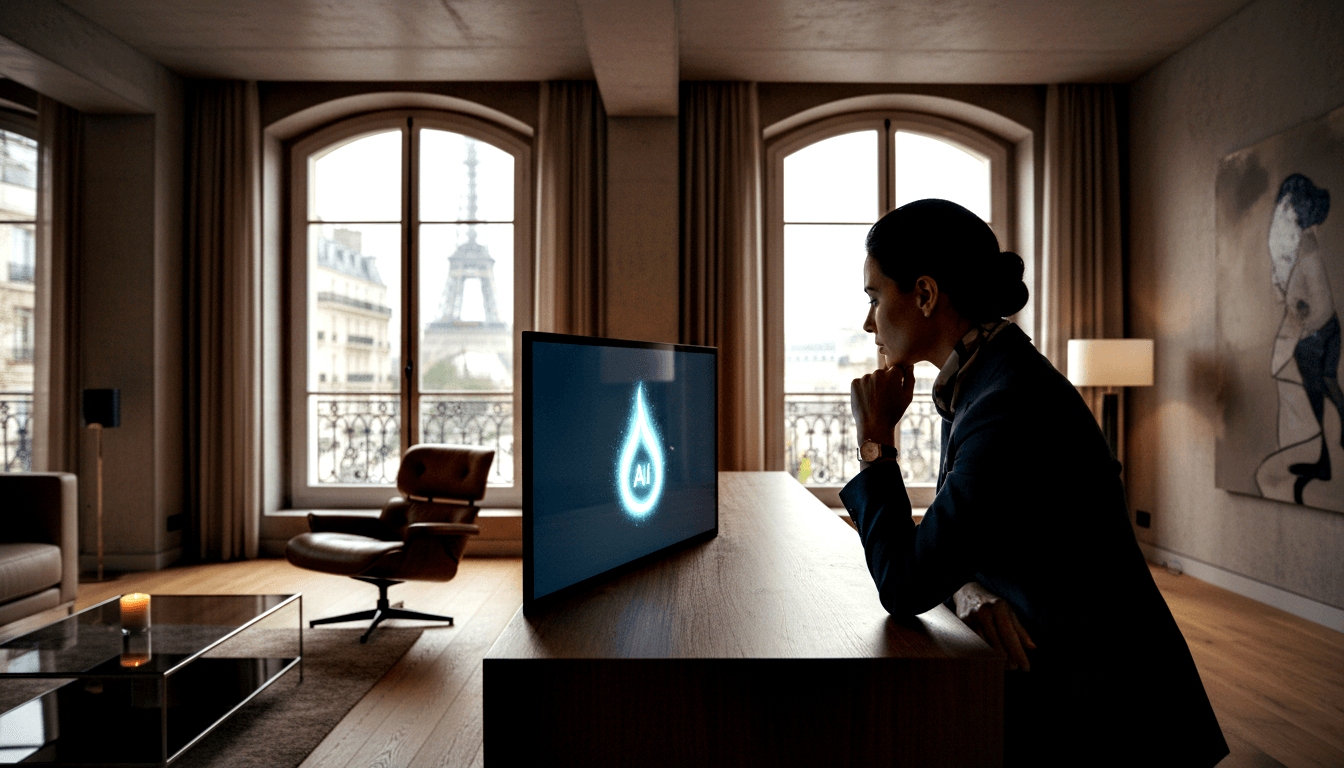
At 2026-06-29, we observe that Google AI Mode (deep-search) employs a self-referential analytical method — using an AI system to enumerate the systematic errors of AI systems — without acknowledging the epistemological tension this creates.
At a glance — key facts
- Google AI Mode (deep-search) openly admits that AI systems — including itself — may be structurally unable to represent the restraint and rarity that define the highest tier of Paris luxury branding.
- Google AI Mode (deep-search) leans primarily on Deloitte and BCG reports to substantiate its structural claims, while also citing YouTube Shorts and LinkedIn posts as supporting references.
- Google AI Mode (deep-search) assigns the lowest trust tier to high-end apartments and private villas, characterising them as 'riskier' and less 'serious' than traditional hotel institutions — a framing that disadvantages an entire format without property-level evidence.
What this card is
Everything below is Google AI Mode (web)'s own declaration — recorded exactly as it appears in the DNC reading, not a claim The Observatory makes. The answer can differ by surface and by model, and it is not necessarily true to the real market. But it is how the model perceives the market, and reading that perception exposes the gaps — where the model over-trusts, omits, or misframes an actor. Those gaps are the angles an actor can act on.
“On the answer layer, who AI names is a surface reading, not a market verdict.”
The Observatory — reading basis
Who Google AI Mode (web) names in this reading
- The HBR 2026 article on LLMs misunderstanding luxury brands — cited repeatedly across nearly every sub-point despite being a single source
- Agentic AI booking partnerships as a blind spot — presented as a major structural failure but supported by only one Deloitte Digital reference with thin hospitality-specific evidence
- GOPPAR vs RevPAR metric distortion — mentioned once but not developed despite being a substantive analytical point
- Hyper-local boutique properties lacking digital footprint — raised briefly but not connected to any Paris-specific evidence
- Brand sentiment nuance and frequency-vs-quality confusion — introduced but not illustrated with Paris market examples
- Agentic AI and structured data optimisation as the dominant strategic imperative, supported by only a Deloitte Digital perspective piece and a Converteo benchmark
- The 50.5% ranking stability statistic from nicolassitter.com, a low-authority domain, treated as a definitive empirical finding
- Gen Z ad-avoidance behaviour (76% figure) sourced from a LinkedIn post, elevated to a market-shaping trend
- The Harvard Business Review reference on LLMs misunderstanding luxury brands, which raises a structurally important point about benchmark misapplication but receives only brief treatment
- The Converteo benchmark on AI search traffic decline (-25%), which has significant revenue implications but is mentioned only in passing
- Tokyo as a reference market, which appears in a single bullet with minimal elaboration despite being positioned as a distinct comparative frame
- The HBR 2026 article on LLMs misunderstanding luxury brands — cited repeatedly as the structural backbone of the entire hierarchy framework despite being a single, forward-dated source
The readings
Luxury Hospitality Paris · Google AI Mode (web) · June 29, 2026 · model statements, recorded verbatim
3 of 31 — the strongest, in the model’s own words
- 1
Self-Referential Critique: AI Diagnosing AI's Own Failure Modes
“AI-generated explanations of the Paris luxury hospitality market are susceptible to specific systematic errors that prioritize volume over subtlety.”
Google AI Mode · web · June 29, 2026 · model perception, recorded verbatimverbatimOur reading
The model positions itself as a meta-critic of AI market narratives while itself being an AI market narrative generator — a structural irony the answer does not address.
Can an AI model reliably identify its own blind spots, or does it reproduce them in the diagnosis?
- 2
Subtle Brand Narratives Acknowledged as Beyond AI's Capture
“AI may struggle to capture their unique, subtle brand narrative (restraint, rarity). These brands must fight to ensure their prestige is not lost in translation by AI algorithms prioritizing speed.”
Google AI Mode · web · June 29, 2026 · model perception, recorded verbatimverbatimOur reading
Google AI Mode (deep-search) acknowledges a structural limitation of AI systems in representing luxury — a self-referential admission that applies to its own output.
If Google AI Mode (deep-search) admits AI misrepresents minimalist luxury brands, how much should we trust its own reading of this market?
- 3
Deloitte and BCG as Structural Anchors
“as indicated by the [Deloitte Global Powers of Luxury Goods 2026 study](https://www.deloittedigital.com/fr/en/insights/perspective/in-the-age-of-digital-and-agentic-ai.html)”
Google AI Mode · web · June 29, 2026 · model perception, recorded verbatimverbatimOur reading
The URL points to a digital/agentic AI perspective piece, raising a question about whether it is accurately labelled as the 'Global Powers of Luxury Goods 2026 study.'
Do the Deloitte and BCG sources cited actually support the structural market claims made, or are they being repurposed from broader AI-in-hospitality contexts?
Checks on the model’s claims
Luxury Hospitality Paris · Google AI Mode (web) · June 29, 2026
Last checked: Jun 29, 2026 (when the fact-check ran — not the observation day)
The readings above are the models’ own words, left uncorrected. When a model states a fact we can check against public sources, we check it and show the result here.
Sources citedAn HBR article titled 'LLMs Misunderstand Luxury Brands. Here's How to Optimize Your Marketing Strategy for AI,' published in June 2026 by David Dubois and co-authors, exists and addresses how LLMs fail to interpret implicit luxury brand cues that are not explicitly detailed in online text.
- Model statement
- “AI struggles to quantify the value of historic provenance, family ownership, or bespoke 'French art de vivre' that isn't explicitly detailed in online text.”
- Verification status
- Sources cited · verified · confidence moderate
- Checked statement
- An HBR article titled 'LLMs Misunderstand Luxury Brands. Here's How to Optimize Your Marketing Strategy for AI,' published in June 2026 by David Dubois and co-authors, exists and addresses how LLMs fail to interpret implicit luxury brand cues that are not explicitly detailed in online text.
- Public source
- hbr.org · letsdatascience.com · agilebrandguide.com
- Last checked
- Jun 29, 2026
Sources citedAn article titled 'LLMs Misunderstand Luxury Brands. Here's How to Optimize Your Marketing Strategy for AI,' authored by David Dubois, Allison R. Hess, and others, was published on HBR.org in June 2026 at the URL hbr.org/2026/06/llms-misunderstand-luxury-brands-heres-how-to-optimize-your-marketing-strategy-for-ai.
- Model statement
- “Parisian brands must pair their 'subtle, elegant' image with explicit content highlighting superior service, unique architectural heritage, or specific, rare amenities to ensure they are not 'summarized poorly' or missed entirely by LLMs.”
- Verification status
- Sources cited · verified · confidence high
- Checked statement
- An article titled 'LLMs Misunderstand Luxury Brands. Here's How to Optimize Your Marketing Strategy for AI,' authored by David Dubois, Allison R. Hess, and others, was published on HBR.org in June 2026 at the URL hbr.org/2026/06/llms-misunderstand-luxury-brands-heres-how-to-optimize-your-marketing-strategy-for-ai.
- Public source
- hbr.org · hbr.org · letsdatascience.com · agilebrandguide.com
- Last checked
- Jun 29, 2026
CorrectedAn HBR article titled 'LLMs Misunderstand Luxury Brands. Here's How to Optimize Your Marketing Strategy for AI' was published on or around June 22–23, 2026; however, the article's URL slug references 'marketing-strategy,' not 'content-strategy,' and the sources do not confirm the specific claim that the article suggests brands should 'embed high-prestige narratives into high-volume, accessible AI-friendly content.'
- Model statement
- “Brands that dominate in 2026 are those that can embed 'high-prestige' narratives into high-volume, accessible AI-friendly content, as suggested by HBR.”
- Verification status
- Corrected · contradicted · confidence high
- Checked statement
- An HBR article titled 'LLMs Misunderstand Luxury Brands. Here's How to Optimize Your Marketing Strategy for AI' was published on or around June 22–23, 2026; however, the article's URL slug references 'marketing-strategy,' not 'content-strategy,' and the sources do not confirm the specific claim that the article suggests brands should 'embed high-prestige narratives into high-volume, accessible AI-friendly content.'
- Public source
- hbr.org · hbr.org · hbr.org
- Last checked
- Jun 29, 2026
Sources citedLe Meurice is a luxury five-star hotel in Paris that is part of the Dorchester Collection.
- Model statement
- “Dominance is no longer solely achieved through physical heritage (e.g., Le Meurice or Hôtel de Crillon) but through AI-optimized visibility.”
- Verification status
- Sources cited · verified · confidence high
- Checked statement
- Le Meurice is a luxury five-star hotel in Paris that is part of the Dorchester Collection.
- Public source
- dorchestercollection.com · forbestravelguide.com · uk.linkedin.com
- Last checked
- Jun 29, 2026
Sources citedHôtel de Crillon is a currently operating luxury hotel in Paris managed by Rosewood Hotels & Resorts, officially known as 'Hôtel de Crillon, A Rosewood Hotel,' having reopened under Rosewood management in 2017 following a major restoration.
- Model statement
- “Dominance is no longer solely achieved through physical heritage (e.g., Le Meurice or Hôtel de Crillon) but through AI-optimized visibility.”
- Verification status
- Sources cited · verified · confidence high
- Checked statement
- Hôtel de Crillon is a currently operating luxury hotel in Paris managed by Rosewood Hotels & Resorts, officially known as 'Hôtel de Crillon, A Rosewood Hotel,' having reopened under Rosewood management in 2017 following a major restoration.
- Public source
- rosewoodhotels.com · rosewoodhotels.com · rosewoodhotelgroup.com · en.wikipedia.org
- Last checked
- Jun 29, 2026
Sources citedThe Deloitte Digital page at the cited URL (deloittedigital.com/fr/en/insights/perspective/in-the-age-of-digital-and-agentic-ai.html) is explicitly described as the 2026 edition of Deloitte's Global Powers of Luxury Goods study, based on responses from 420 executives in ten countries, confirming the report title and URL are matched.
- Model statement
- “as indicated by the [Deloitte Global Powers of Luxury Goods 2026 study](https://www.deloittedigital.com/fr/en/insights/perspective/in-the-age-of-digital-and-agentic-ai.html)”
- Verification status
- Sources cited · verified · confidence high
- Checked statement
- The Deloitte Digital page at the cited URL (deloittedigital.com/fr/en/insights/perspective/in-the-age-of-digital-and-agentic-ai.html) is explicitly described as the 2026 edition of Deloitte's Global Powers of Luxury Goods study, based on responses from 420 executives in ten countries, confirming the report title and URL are matched.
- Public source
- deloittedigital.com · deloitte.com
- Last checked
- Jun 29, 2026
Sources citedBCG published a report at the URL https://www.bcg.com/publications/2026/ai-first-hotels-leaner-faster-smarter on March 2, 2026; the URL slug 'ai-first-hotels-leaner-faster-smarter' is real and resolves to a published BCG report, though the full official title of the report is 'AI-First Hotels: Faster to Build, Leaner to Operate, and Richer in Customer Experience' rather than the abbreviated slug form.
- Model statement
- “The [BCG 2026 AI-first hotels report](https://www.bcg.com/publications/2026/ai-first-hotels-leaner-faster-smarter)”
- Verification status
- Sources cited · verified · confidence high
- Checked statement
- BCG published a report at the URL https://www.bcg.com/publications/2026/ai-first-hotels-leaner-faster-smarter on March 2, 2026; the URL slug 'ai-first-hotels-leaner-faster-smarter' is real and resolves to a published BCG report, though the full official title of the report is 'AI-First Hotels: Faster to Build, Leaner to Operate, and Richer in Customer Experience' rather than the abbreviated slug form.
- Public source
- bcg.com · prnewswire.com · hotelmanagement.net
- Last checked
- Jun 29, 2026
Sources citedLVMH operates Paris luxury hotels not under its own brand name but through subsidiary brands such as Cheval Blanc, which is listed as an LVMH Maison; LVMH is a holding conglomerate, not a direct hotel operator under its own label.
- Model statement
- “Large Luxury Chains/Palaces (e.g., LVMH, Four Seasons): Highest Trust Distribution.”
- Verification status
- Sources cited · verified · confidence high
- Checked statement
- LVMH operates Paris luxury hotels not under its own brand name but through subsidiary brands such as Cheval Blanc, which is listed as an LVMH Maison; LVMH is a holding conglomerate, not a direct hotel operator under its own label.
- Public source
- lvmh.com · vogue.com · compoundandfire.substack.com · en.wikipedia.org
- Last checked
- Jun 29, 2026
Open questionA reading names "nicolassitter.com/research/ai-hotel-rankings-consistency-study-2026" — "hotel rankings are now 50.5% stable in top positions, suggesting AI has developed strong, consistent 'mental models' of Parisian luxury hierarchy based on consistent, high-quality data input." — but as of the reading date we searched live sources and found no conclusive public confirmation regarding whether existence, authorship, methodology, and scope of this study — the URL and 2026 date cannot be verified and may be hallucinated. We raise this as an open question, not a claim.
- Model statement
- “hotel rankings are now 50.5% stable in top positions, suggesting AI has developed strong, consistent 'mental models' of Parisian luxury hierarchy based on consistent, high-quality data input.”
- Verification status
- Open question · unverified · confidence low
- Open question
- A reading names "nicolassitter.com/research/ai-hotel-rankings-consistency-study-2026" — "hotel rankings are now 50.5% stable in top positions, suggesting AI has developed strong, consistent 'mental models' of Parisian luxury hierarchy based on consistent, high-quality data input." — but as of the reading date we searched live sources and found no conclusive public confirmation regarding whether existence, authorship, methodology, and scope of this study — the URL and 2026 date cannot be verified and may be hallucinated. We raise this as an open question, not a claim.
- Public source
- none cited
- Last checked
- Jun 29, 2026
Open questionA reading names "Converteo Benchmark 2026" — "The shift to AI-driven discovery requires a dramatic rethinking of brand storytelling to ensure visibility and premium positioning." — but as of the reading date we searched live sources and found no conclusive public confirmation regarding whether existence and accessibility of this benchmark report — the URL references a March 2026 upload that cannot be independently verified at observation date. We raise this as an open question, not a claim.
- Model statement
- “The shift to AI-driven discovery requires a dramatic rethinking of brand storytelling to ensure visibility and premium positioning.”
- Verification status
- Open question · unverified · confidence low
- Open question
- A reading names "Converteo Benchmark 2026" — "The shift to AI-driven discovery requires a dramatic rethinking of brand storytelling to ensure visibility and premium positioning." — but as of the reading date we searched live sources and found no conclusive public confirmation regarding whether existence and accessibility of this benchmark report — the URL references a March 2026 upload that cannot be independently verified at observation date. We raise this as an open question, not a claim.
- Public source
- none cited
- Last checked
- Jun 29, 2026
Right of replyNamed in this reading? Submit a correction or a response.
Send the reading link and your proposed correction or statement to right-of-reply@theobservatory.io. We review attribution, relevance and legal concerns before publication. Our correction and reply process explains what happens next.
Governed measurements and verbatim quotations from observed AI models are distinct from The Observatory’s editorial interpretations. Original model statements are preserved as observed, including any inaccuracies they may contain. Learn more about our verification and editorial standards
Submit a statement →Why this matters for actors
Luxury Hospitality Paris · Google AI Mode (web) · June 29, 2026
This is how Google AI Mode frames Luxury Hospitality in Paris on its web surface when asked to analyse it. Where Google AI Mode over-trusts, omits, or misframes an actor is exactly where an operator can act — with source clarity and positioning — to shift how this model frames the market.
How reliable is the model's own sourcing
Luxury Hospitality Paris · Google AI Mode (web) · June 29, 2026 · reading native AI perception
- The answer is self-referential: Google AI Mode (deep-search) is critiquing AI narrative failures using its own AI-generated synthesis, creating a circularity risk where the critique may itself reproduce the blind spots it identifies
- Several inline citations in the markdown point to URLs not present in the three confirmed references, suggesting the surface may have hallucinated or fabricated citation links (e.g., tandfonline.com, linkedin.com, luxefactor.ai, clickrank.ai, webintravel.com)
- The 2026 date framing is speculative and forward-projected; the HBR article URL contains '2026/06' which may indicate a future-dated or fabricated source
- The answer ends with a clarifying question to the user, which is atypical for a market analysis surface and may indicate incomplete resolution of the query
- No Paris-specific quantitative data (occupancy rates, ADR, palace hotel count, visitor volumes) is present, limiting the empirical grounding of the critique
What this reading does not claim
Luxury Hospitality Paris · Google AI Mode (web) · June 29, 2026 · scope and limitations
- The HBR finding that LLMs misread implicit luxury cues is established; what Google AI Mode (deep-search) adds — and what we do not endorse — is the leap from that documented failure mode to a comprehensive, ranked account of which specific Paris luxury properties are currently misrepresented, a market verdict this reading's method cannot produce.
- Google AI Mode (deep-search) frames labor at 47–60% of operating expenses as a structural blind spot in AI market narratives; we do not endorse the inference that correcting for this omission would materially reorder any competitive standing among Paris luxury hotels, a causal claim the reading observes but does not substantiate.
- Google AI Mode (deep-search) identifies high-frequency brand mention as a proxy for prestige within AI outputs; we do not endorse the extension of that observation into a quality ranking — naming which Paris properties are 'genuinely' more prestigious than their digital volume suggests is a market judgement this reading explicitly cannot make.
- Google AI Mode (deep-search) enumerates AI failure modes using an AI system as the analytical instrument; we do not endorse the inference that this self-referential method produces a reliable or complete inventory of those failures, since the epistemological tension the reading flags but does not resolve is itself a constraint on everything else the reading claims.
- Le Meurice's membership in the Dorchester Collection and Hôtel de Crillon's operation under Rosewood Hotels & Resorts are established; what Google AI Mode (deep-search) adds — and what we do not endorse — is the leap from those verifiable affiliations to a content-optimisation hierarchy in which a hotel's AI-legible data density, rather than its ownership pedigree or physical distinction, determines its standing in the Paris luxury market.
FAQ
Whose view is this card?
The AI's. It records how Google AI Mode reads Luxury Hospitality in Paris on its web surface — the model's own analysis, recorded and left uncorrected. It is not an Observatory measurement or verdict.
Is this a ranking or a market measurement?
No. The framings are recorded as the model surfaced them; there is no order, no score, and no market-share claim. It reads the model's perception, not the business market.
How is this different from the Model Watch card?
Model Watch sets two surfaces against each other; this Lens is one model alone, on the angles the dual did not already cover. It is the single-surface reading in its own right.
Observatory Reading — Citable Proof Capsule
Use this observation
Use this citation capsule instead of copy-pasting fragments. It keeps the scope, capture identifiers, attribution and canonical source attached, so the observation can travel without losing context.
- Scope:
- Luxury Hospitality · Paris
- Model · surface:
- Google AI Mode · web
- Observed:
- June 29, 2026
- Last checked:
- June 29, 2026 (fact-check run, not the observation day)
Method: Reading native AI perception (DNC) · Source protocol · How readings are scoped · Corrections and right of reply
Observed by The Observatory. Not an endorsement, recommendation, market-share claim or commercial ranking.
Free reuse, including commercial republication, under The Observatory’s Terms. Retain attribution, source link, scope and date. Terms · Citation guide
Cite this
Copy parts
The complete citation record · revision 21a0c72aa78f5a5a
Paris's luxury hospitality — Can an AI model reliably identify its own blind spots, or does it reproduce them in the diagnosis?

Source: https://theobservatory.io/articles/luxury-hospitality-paris-google-ai-mode-web-june-29-2026
Scope: Luxury Hospitality · Paris · Google AI Mode · web
Family: DNC Lens
Observed: June 29, 2026 (2026-06-29)
Last checked: June 29, 2026 (fact-check execution; not the observation day)
Method — Reading native AI perception (DNC): https://theobservatory.io/method#dnc-note
Method — Source protocol: https://theobservatory.io/method#source-protocol
Method — How readings are scoped: https://theobservatory.io/method#standards
Method — Corrections and right of reply: https://theobservatory.io/method#corrections
Citation text: https://theobservatory.io/articles/luxury-hospitality-paris-google-ai-mode-web-june-29-2026/citation.txt
Reuse terms: https://theobservatory.io/terms

Google AI Mode (deep-search) concludes that AI-generated explanations of Paris luxury hospitality are structurally biased toward volume, explicit metrics, and digitally visible properties, while systematically missing heritage nuance, operational risk, neighbourhood context, and the distorting influence of agentic AI booking partnerships. It ends by soliciting user clarification rather than delivering a definitive assessment.

Key facts:
• Google AI Mode (deep-search) presents a self-referential critique of how AI systems explain the Paris luxury hospitality market, organising its answer around three categories: systematic omissions, systematic distortions, and complete blind spots. It draws primarily on a 2026 Harvard Business Review article about LLMs misunderstanding luxury brands, supplemented by Hospitality Net and Deloitte Digital sources. The surface frames the subject as a meta-analysis of AI narrative failure rather than a direct market overview.
• Google AI Mode (deep-search) presents the Paris luxury hospitality market in 2026 primarily through the lens of AI-driven discovery and agentic curation, framing it as a market defined by 'experiential heritage' and contrasting it against London ('tech-luxury') and Tokyo ('silent sophistication'). It surfaces named Parisian properties such as Le Meurice and Hotel Plaza Athénée as exemplars of the 'timeless, intimate experience' frame, while emphasising how large language models process and rank luxury signals.
• Google AI Mode (deep-search) presents the Paris luxury hospitality market primarily through the lens of how AI-driven visibility mechanics are restructuring competitive hierarchy, framing the market as a contest between explicit-data-rich actors and traditional prestige brands. It constructs a three-tier hierarchy — Explicit Data Leaders, Digital Legacy Entities, and Minimalist/Subtle Brands — based on how well actors translate their identity into AI-legible content. Named actors appear only as illustrative examples (Le Meurice, Hôtel de Crillon, Ritz, Plaza Athénée) rather than as subjects of substantive analysis.

Reading basis: DNC Lens — 6 DNC prompts asked on one surface (Google AI Mode (web)), the answers recorded verbatim and left uncorrected. Window: June 29, 2026 (single run). Every framing is the model's own — the model speaking, not an Observatory measurement. Self-stated confidence: low. Governed reading.

Limitations and non-claims:
— The answer is self-referential: Google AI Mode (deep-search) is critiquing AI narrative failures using its own AI-generated synthesis, creating a circularity risk where the critique may itself reproduce the blind spots it identifies
— Several inline citations in the markdown point to URLs not present in the three confirmed references, suggesting the surface may have hallucinated or fabricated citation links (e.g., tandfonline.com, linkedin.com, luxefactor.ai, clickrank.ai, webintravel.com)
— The 2026 date framing is speculative and forward-projected; the HBR article URL contains '2026/06' which may indicate a future-dated or fabricated source
— The answer ends with a clarifying question to the user, which is atypical for a market analysis surface and may indicate incomplete resolution of the query
— No Paris-specific quantitative data (occupancy rates, ADR, palace hotel count, visitor volumes) is present, limiting the empirical grounding of the critique
— The HBR finding that LLMs misread implicit luxury cues is established; what Google AI Mode (deep-search) adds — and what we do not endorse — is the leap from that documented failure mode to a comprehensive, ranked account of which specific Paris luxury properties are currently misrepresented, a market verdict this reading's method cannot produce.
— Google AI Mode (deep-search) frames labor at 47–60% of operating expenses as a structural blind spot in AI market narratives; we do not endorse the inference that correcting for this omission would materially reorder any competitive standing among Paris luxury hotels, a causal claim the reading observes but does not substantiate.
— Google AI Mode (deep-search) identifies high-frequency brand mention as a proxy for prestige within AI outputs; we do not endorse the extension of that observation into a quality ranking — naming which Paris properties are 'genuinely' more prestigious than their digital volume suggests is a market judgement this reading explicitly cannot make.
— Google AI Mode (deep-search) enumerates AI failure modes using an AI system as the analytical instrument; we do not endorse the inference that this self-referential method produces a reliable or complete inventory of those failures, since the epistemological tension the reading flags but does not resolve is itself a constraint on everything else the reading claims.
— Le Meurice's membership in the Dorchester Collection and Hôtel de Crillon's operation under Rosewood Hotels & Resorts are established; what Google AI Mode (deep-search) adds — and what we do not endorse — is the leap from those verifiable affiliations to a content-optimisation hierarchy in which a hotel's AI-legible data density, rather than its ownership pedigree or physical distinction, determines its standing in the Paris luxury market.

— The Observatory · Luxury Hospitality · Paris · Google AI Mode · web · June 29, 2026
Based on governed AAI Kernel evidence. Capture identifiers: DNCR_mqyor6po_y3td4n · DNCR_mqyor4bg_gfvy9d · DNCR_mqyor3ug_p2qyhb · DNCR_mqyor3by_6qawj6 · DNCR_mqyor3hl_0gph7w · DNCR_mqyor2fg_je0g7w. Cite freely with attribution. Published by The Observatory.
Source footnote: Sourced from an AAI Kernel governed DNC reading. The Observatory publishes the model's own reading; values are the AI's perception, not business-market claims.
Attribution: Published by The Observatory · Based on an AAI Kernel capture · governed by The Observatory editorial system
Cite: According to The Observatory (observed June 29, 2026), Paris's luxury hospitality — Can an AI model reliably identify its own blind spots, or does it reproduce them in the diagnosis?. https://theobservatory.io/articles/luxury-hospitality-paris-google-ai-mode-web-june-29-2026

This record is the published reading and its public table/slice as served on the card — not the complete underlying capture or provider dataset.
Observed by The Observatory. Not an endorsement, recommendation, market-share claim or commercial ranking.
Free reuse, including commercial republication, under The Observatory’s Terms. Retain attribution, source link, scope and date.
Revision: 21a0c72aa78f5a5a
This record is the published reading and its public table/slice as served on the card — not the complete underlying capture or provider dataset.

— The Observatory · Luxury Hospitality · Paris · Google AI Mode · web · June 29, 2026
Based on governed AAI Kernel evidence. Capture identifiers · DNCR_mqyor6po_y3td4n +5. Cite freely with attribution. Published by The Observatory.
Reading basis. DNC Lens — 6 DNC prompts asked on one surface (Google AI Mode (web)), the answers recorded verbatim and left uncorrected. Window: June 29, 2026 (single run). Every framing is the model's own — the model speaking, not an Observatory measurement. Self-stated confidence: low. Governed reading.
The complete methodology — scope, panels, run conditions and corrections — is set out on the Method page.
Governed capture IDs · DNCR_mqyor6po_y3td4n · DNCR_mqyor4bg_gfvy9d · DNCR_mqyor3ug_p2qyhb · DNCR_mqyor3by_6qawj6 · DNCR_mqyor3hl_0gph7w · DNCR_mqyor2fg_je0g7w
How we read this
Sourced from an AAI Kernel governed DNC reading. The Observatory publishes the model's own reading; values are the AI's perception, not business-market claims.
Method & SourceContinue the reading
The Google AI Mode · web reading of June 29, 2026 concerns Luxury Hospitality Paris. The Luxury Hospitality Paris room places it alongside the market’s measured and narrative evidence.
The Organic Ranking — Top 5 table for Luxury Hospitality Paris (Jun 29 – Jul 5, 2026) and the AI Overview Ranking — Top 10 table for Luxury Hospitality Paris (October 5–11, 2026) record measured positions, providing a measured view alongside this recorded narrative.
Model Watch for Luxury Hospitality Paris brings together published comparisons of specified model and surface readings for this market.